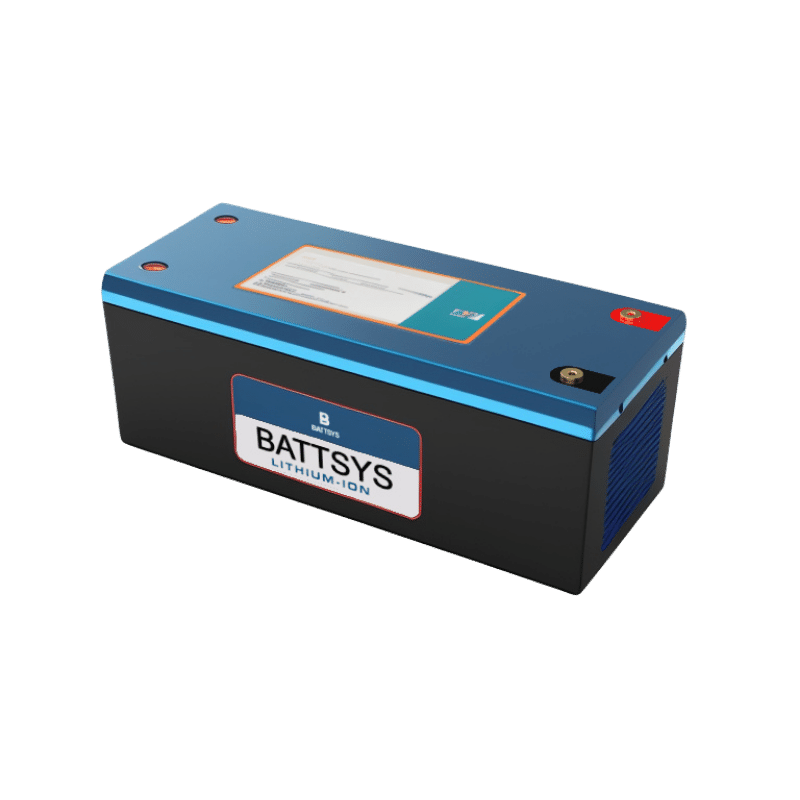
What conditions should lithium-ion batteries meet in terms of safety performance?
Lithium ion batteries have the advantages of light weight, large capacity, and no memory effect, so they have been widely used - many digital devices today use lithium-ion batteries as power sources, although their prices are relatively expensive. Lithium ion batteries have a high energy density, with a capacity 1.5 to 2 times that of nickel hydrogen batteries of the same weight, and have a very low self discharge rate. In addition, the lack of "memory effect" and the absence of toxic substances in lithium-ion batteries are also important reasons for their widespread use.

Regarding the safety issues of lithium-ion batteries, please pay attention to them. Lithium ion batteries are prone to short circuits during the charging process. Although most lithium-ion batteries come with anti short circuit protection circuits and explosion-proof wires. But in many cases, this circuit may not be useful in various situations. The use of explosion-proof wires is also limited. So, what conditions should lithium-ion batteries meet in terms of safety performance?
1、 Safety characteristics of lithium-ion batteries
There are very strict international standards for assessing the safety performance of lithium-ion batteries. A qualified lithium-ion battery should meet the following conditions in terms of safety performance:
1. Short circuit: no fire, no explosion
2. Overcharging: No fire, no explosion
3. Hot box experiment: No fire, no explosion (150 ℃ constant temperature for 10 minutes)
4. Needle puncture: No explosion, no explosion (use a Ø 3mm nail to penetrate the battery)
5. Flat impact: No fire, no explosion (10kg heavy object hits battery from a height of 1M)
2、 Advantages of lithium-ion batteries
1. The working voltage of high-voltage single cell batteries can reach 3.7-3.8V, while that of lithium iron phosphate batteries is 3.2V, which is three times higher than that of Ni Cd and Ni MH batteries.
2. The actual specific energy that can be achieved with high specific energy is around 555Wh/kg, which means that the material can reach a specific capacity of over 150mAh/g, 3-4 times that of Ni Cd and 2-3 times that of Ni MH, approaching about 88% of its theoretical value.
3. The long cycle life can generally reach more than 500 times, even more than 1000 times, and lithium iron phosphate can reach more than 2000 times. Regarding small current discharge appliances, the lifespan of the battery will double the competitiveness of the appliance.
4. Good safety performance, pollution-free, and no memory effect. As the predecessor of Li ion batteries, lithium-ion batteries have reduced their scope of use due to the tendency of metal lithium to form dendrites and cause short circuits. Li ion batteries do not contain elements that pollute the environment such as cadmium, lead, and mercury. A major drawback of some processes such as sintering Ni Cd batteries is the "memory effect", which seriously restricts the use of batteries. However, Li ion batteries do not have this problem at all.
5. The self discharge rate of Li ion, which is filled with electricity at room temperature and stored for one month, is about 2%, which is significantly lower than 25-30% for Ni Cd and 30-35% for Ni MH.
6. Fast charging 1C can reach over 80% of the nominal capacity after 30 minutes of charging, while phosphate iron batteries can reach 90% of the nominal capacity after 10 minutes of charging.
7. The working temperature is -25~45 ° C. With the improvement of electrolyte and positive electrode, it is expected to be expanded to -40~70 ° C.
8. Burning: Non explosive (gas flame barbecue battery)
3、 Disadvantages of lithium-ion batteries
1. Aging: Unlike other rechargeable batteries, the capacity of lithium-ion batteries slowly declines, which is related to the number of uses and temperature. This phenomenon of decline can be represented by a decrease in capacity or an increase in internal resistance. Because it is related to temperature, it is easier to reflect in electronic products with high working current. Replacing graphite with lithium titanate seems to extend its lifespan. The relationship between storage temperature and permanent capacity loss rate:
2. Recycling rate: Approximately 1% of newly manufactured products need to be recycled for various reasons.
3. Unable to tolerate overcharging: During overcharging, excessively embedded lithium ions will be permanently fixed in the lattice and cannot be released, which can lead to a short battery life.
4. Cannot tolerate over discharge: During over discharge, excessive lithium ion extraction from the electrode can lead to lattice collapse, thereby shortening the lifespan.