What are the functions of lithium-ion battery BMS battery management system?
BMS battery management system, commonly known as battery nanny or battery manager, is mainly used for intelligent management and maintenance of various battery units, preventing overcharging and overdischarging of batteries, extending the service life of batteries, and monitoring the status of batteries.

The BMS management system mainly consists of various sensors, actuators, controllers, and signal lines. In order to ensure the safe operation of new energy vehicles on the road and comply with relevant standards and regulations, the BMS management system should have the following functions:
Battery parameter detection
Including total voltage, total current, single battery voltage detection (to prevent overcharging, overdischarging, and even reverse polarity), temperature detection (preferably with temperature sensors for each string of batteries, key cable joints, etc.), smoke detection (to monitor electrolyte leakage, etc.), insulation detection (to monitor leakage), collision detection, etc.
Battery state estimation includes state of charge (SOC) or depth of discharge (DOD), state of health (SOH), state of function (SOF), state of energy (SOE), fault and safety state (SOS), etc.
Online fault diagnosis
Including fault detection, fault type judgment, fault location, fault information output, etc. Fault detection refers to the use of diagnostic algorithms to diagnose fault types and provide early warning based on collected sensor signals. Battery failure refers to sensor failures, actuator failures (such as contactors, fans, pumps, heaters, etc.), as well as network failures, various controller software and hardware failures in subsystems such as battery packs, high-voltage circuits, and thermal management. The faults of the battery pack itself refer to overvoltage (overcharge), undervoltage (overdischarge), overcurrent, ultra-high temperature, internal short circuit faults, loose joints, electrolyte leakage, insulation reduction, etc.
Battery safety control and alarm
Including thermal system control and high-voltage electrical safety control. After the BMS diagnoses the fault, it notifies the vehicle controller through the network and requires the vehicle controller to take effective measures (BMS can also cut off the main circuit power supply when it exceeds a certain threshold) to prevent damage to the battery and personnel caused by high temperature, low temperature, overcharging, overdischarging, overcurrent, leakage, etc.
charging control
The BMS has a charging management module that can control the charger to safely charge the battery based on its characteristics, temperature, and power level.
battery balancing
The existence of inconsistency makes the capacity of the battery pack smaller than the capacity of the smallest cell in the group. Battery balancing refers to the use of active or passive, dissipative or non dissipative balancing methods based on the information of individual cells, in order to make the capacity of the battery pack as close as possible to the capacity of the smallest cell.
thermal management
Based on the temperature distribution information inside the battery pack and the charging and discharging requirements, the intensity of active heating/cooling is determined to ensure that the battery operates at the most suitable temperature and fully utilizes its performance.
network communication
BMS needs to communicate with network nodes such as the vehicle controller; At the same time, BMS is inconvenient to disassemble on vehicles and requires online calibration, monitoring, automatic code generation, and online program download (program updates without disassembling the product) without disassembling the shell. Generally, in vehicle networks use CAN bus technology.
Information storage
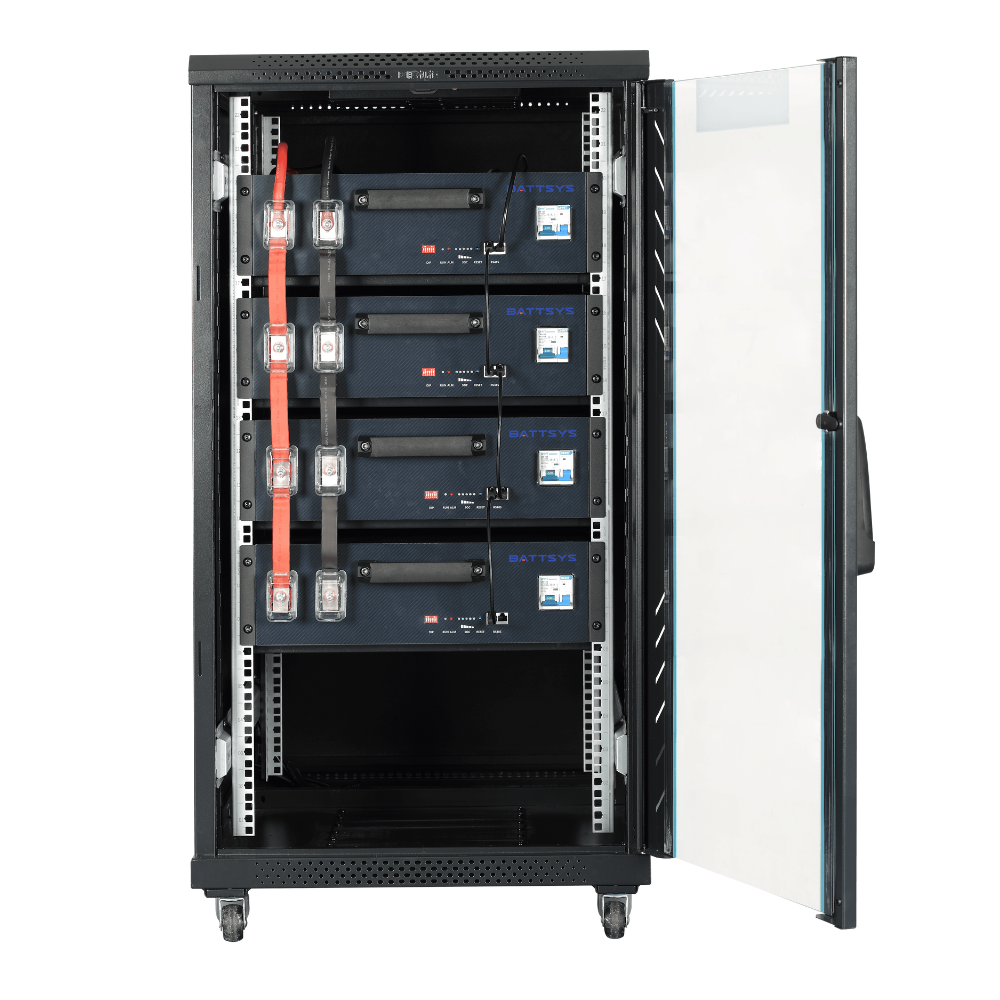
Used to store critical data such as SOC, SOH, SOF, SOE, accumulated charge and discharge Ah, fault codes, and consistency. The actual BMS in the vehicle may only have some of the hardware and software mentioned above. Each battery unit should have at least one battery voltage sensor and one temperature sensor. For battery systems with dozens of batteries, there may only be one BMS controller, or even the BMS function may be integrated into the vehicle's main controller. For a battery system with hundreds of battery cells, there may be one master controller and multiple slave controllers that manage only one battery module. For each battery module with dozens of battery cells, there may be some module circuit contactors and balancing modules, and the controller manages the battery module like measuring voltage and current, controls the contactors, balances the battery cells, and communicates with the main controller. According to the reported data, the main controller will perform battery state estimation, fault diagnosis, thermal management, etc.
Electromagnetic Compatibility
Due to the harsh operating environment of electric vehicles, BMS is required to have good electromagnetic interference resistance and low external radiation.
As the monitoring and management center of the new energy vehicle power battery pack, the BMS management system must dynamically monitor the temperature, voltage, charging and discharging current and other related parameters of the battery pack in real time. When necessary, it can take emergency measures to protect each individual battery and avoid safety issues such as overcharging, overdischarging, high temperature, and short circuit in the battery pack.
In addition, the BMS management system must accurately estimate the SOC of the battery throughout its entire life cycle, and promptly provide key information such as remaining power, driving range, and abnormal faults to the driver in an appropriate manner. At the same time, it must complete the data exchange function between the system and the vehicle ECU or upper computer in an appropriate manner.