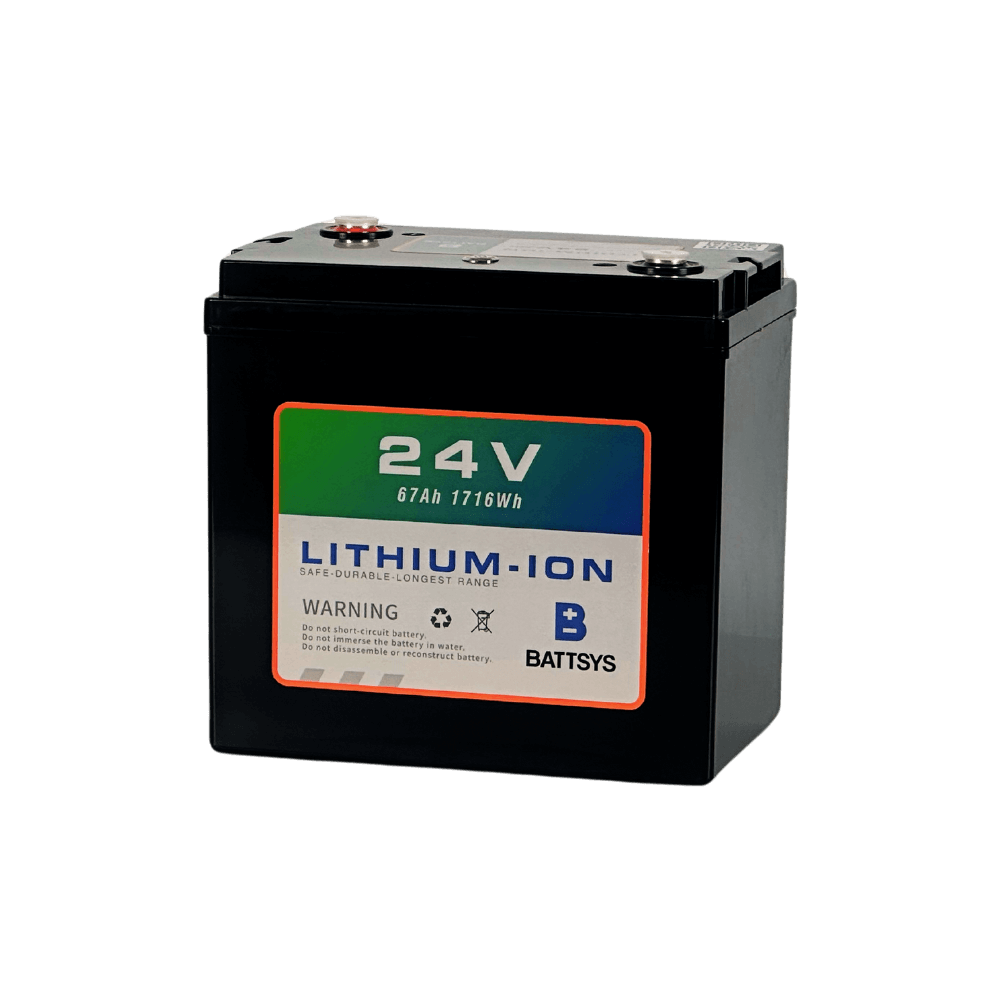
18650 lithium battery components that can save lives in critical moments.
1. Safety valve
Just by hearing this name, you can tell its position in battery components. The safety valve is located between the cap and the rolled battery cell, and its function is to protect the safety of the battery and the user, becoming the ultimate barrier for battery explosion prevention.

The organic electrolyte or polymer inside lithium-ion batteries will be electrolyzed under high current and high temperature conditions, producing gas that rapidly expands, causing an increase in internal pressure. In severe cases, it can break through the shell and cause an explosion. Nowadays, the vast majority of batteries are packaged in metal shells such as steel and aluminum shells. Overcharging, short circuits, high temperatures, and even compression of the battery can cause a sudden increase in internal pressure. When the pressure exceeds the capacity of the shell, the battery will explode. This has also led to the rapid development of polymer soft packs. When gas bubbles occur inside the battery, the gas can break through the soft pack shell earlier, avoiding excessive accumulation and causing intense explosions. However, polymer soft pack batteries have only changed their battery form and have not eliminated the problem of battery explosions.
The safety valve solves this problem very well, as it can prevent most battery gas explosions from occurring. The safety valve is a standard feature of every 18650 battery and the most important explosion-proof barrier. When the internal pressure of the battery rises to 1.0-1.2Mpa, the top safety valve will automatically open to exhaust and reduce pressure, avoiding explosion. However, after the safety valve is opened, the chemical substances leaked from inside the battery will react with oxygen in the air under high temperature conditions, and there is still a possibility of fire. Therefore, safety cannot be solely attributed to the safety valve. In addition, some 18650 batteries now come with built-in protection boards, which have functions such as overcharge, over discharge, and short circuit protection, providing dual protection for the battery. Nowadays, the safety performance of regular batteries is very high, and the possibility of explosion is very low. However, if a battery accident occurs, the existence of a safety valve will be the key to "saving lives".
It is the existence of these small parts that ensures the normal operation of the battery, protects the safety of users, and even becomes the last straw to save lives in case of battery accidents. The country's attention to this field has also promoted the standardization and normalization of battery small parts.
2. Sealing ring
The sealing ring is located under the battery cap to ensure good sealing of the battery, block the leakage of electrolyte, and provide a good sealed environment for internal reactions of the battery. At the same time, when the battery cap is pressed down, it can also play a role in reducing pressure and buffering, ensuring the normal operation of internal components of the battery and providing important guarantees for the battery's lifespan and safety.
The function of the sealing ring is not only to ensure the sealing performance of the battery, but also to "save lives" in critical moments. Generally, at least one weak point is set on the sealing ring, which has a lower strength than other parts of the main body plane. When the gas pressure inside the battery abnormally increases to the explosion pressure of the battery, the weak part of the sealing ring can break, releasing the gas inside the battery from the broken part. At the same time, it is discharged according to the set gas flow path to prevent unpredictable airflow and avoid strong explosions of the battery.
The material of the sealing ring varies depending on the type, shape, and usage environment of the battery. The most commonly used is perfluororubber sealing ring, which has the characteristics of high price and high performance. However, the cost of sealing components in lithium batteries should not only consider the purchase price of the sealing components, but also the service life and losses caused by faults and maintenance. Perfluororubber sealing rings are relatively expensive, but their performance and lifespan are the best, making them the most cost-effective material overall.
However, most rubber seals will undergo elastic deformation under pressure, and as the pressure increases, permanent plastic deformation will also occur, which will affect the service life of the battery. For some special batteries, it is obvious that they cannot meet their requirements, which requires new sealing rings made of other materials. Ceramic materials have good acid and alkali resistance, corrosion resistance, high temperature resistance and other characteristics, making them a new choice. Nowadays, ceramic sealing rings are increasingly used in the power battery industry. The Ministry of Industry and Information Technology recently collected standards for "Ceramic Sealing Rings for Power Lithium ion Batteries", which will provide more detailed regulations on the specifications and use of ceramic sealing rings.
3. Flame retardant insulation and termination tape
Both the inside and outside of the battery are wrapped with adhesive tapes of various colors, and some even have trademark codes printed on them. However, it is not only for the sake of "appearance", but also an essential part of battery safety. There are generally two types of adhesive tape in batteries. One is the termination tape that exists inside the battery, which is a pressure-sensitive adhesive tape used for electrode winding, electrode protection, and core termination processes to ensure the normal operation of battery reactions. Another type is the "clothing" used outside the battery to provide the most basic protection for the battery: collision prevention and resistance to high temperatures. In the event of an accidental explosion of the battery, this "outer layer" also serves as an explosion buffer to prevent combustion, becoming a protective umbrella for battery safety.
Lithium battery termination tape, also known as lithium battery cell specific tape, generally has a thickness of 0.016-0.055cm. Termination tape belongs to a type of pressure-sensitive tape, and in addition to the general characteristics of pressure-sensitive tape, it must also have certain acid, alkali, high temperature, and electrolyte resistance abilities. The termination tapes currently available on the market mainly use polyester film (PET) or polypropylene film (PP) as the substrate, coated with acrylic or rubber special adhesives that are resistant to lithium battery electrolytes. They are specifically used for insulation protection and fixation of lithium battery cell termination and other parts.
The insulation flame-retardant adhesive tape used for the battery shell provides the most direct protection for the battery, with a higher thickness than the termination tape. It plays a buffering role when the battery is impacted, and also has high flame retardant, sealing, and high temperature resistance characteristics to prevent external forces from damaging the battery, optimize battery quality, and extend battery life. And its most important function is to ensure the safety of users. When there is a leakage of electrolyte in the battery, its sealing ability can prevent potential harm to the user caused by the electrolyte. When the battery accidentally burns or even explodes, its super strong flame retardancy can block the combustion of the battery, thereby minimizing the harm to the greatest extent possible. The colors of insulation flame retardant adhesive tape are also more diverse, and some will print product codes and trademarks, which improves the "appearance" of batteries and indirectly drives battery sales.
The Ministry of Industry and Information Technology has released a solicitation for "Insulation Flame Retardant Adhesive Tape for Power Battery Cases", which will also provide unified standards for the color, specifications, and performance of battery adhesive tape, making the application of insulation flame retardant adhesive tape more standardized, beneficial to the development of the battery industry, and strengthening our own safety protection.